Field Comments & Feedback on use of the ICRI
__________________________
Apex Fire Department, North Carolina
November, 2006
Subject: RE: CEDAP ICRI follow-up
Seth,
I am sure you saw our recent chemical fire. Well if not just wanted to say the ICRI worked well. We were forced to shut down our 911 center as part of a town wide evac. However, we were able to utilize the unit to aid in on sight communications as well as use with other out of county units. At one point there were 300 FF from 6 counties on the scene and the event lasted 3.5 days. Very satisfied with the unit.
Chief Haraway
__________________________
Haralson County EMA, Georgia
Date: 11/06/2006 12:09PM
Subject: CEDAP-ICRI C-AT
Sir,
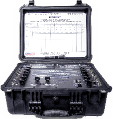
I am the Emergency Management Director for Haralson County, Georgia. Recently we were awarded a Incident Commanders Radio Interface (ICRI) gateway by way of the CEDAP program constructed by Communication Applied Technologies. I would just like to say how much we appreciate the program and the unit awarded.
Recently we have been a part of several training venues between emergency providers in our area. We have approached several agencies around our county and are attempting to combine resources to form an all hazards team that will include much of Northwest Georgia. At one of these sessions we deployed the ICRI to combine communications between 6 participating agencies. The unit's performance was remarkable. The ability to use multi-juridiction's radios in a manner that did not require the addition of a complete communications branch was breathtaking to say the least. The ICRI (IKK-REE as it has come to be known) recieved high praise and opened a new beginning in interoperability for our project. I feel that with this device much of the communication issues and concerns that have plagued our efforts were dismissed.
Currently we are combining the resources of 5 counties and their municipalities with another 5 jurisictions who have shown interest. In the application for the device I touched on our county's working relationship, and the need to incorporate cross the board communication. But, with this device we can collaborate with outside agencies in means that were not available in prior times of need. We recently had an incident that received national coverage with a response of over 20 agencies. The incident, in brief, was a structural collapse secondary to an explosion. One of the major complaints from responders was the lack of communication between agencies via wireless means. We received aid from a county in north Georgia by way of a communications trailer that offset this issue. This, of course, was prior to the delivery of our ICRI and we managed the incident as well we could. The linking of radios would have been instrumental for that incident and was brought to full appreciation upon deployment of the ICRI last week. The command staff and all jurisdictional officers were highly impressed with the "little black box" capabilities. I feel that it will make our abilities expand immensely and allow our Regional Response Team concept to come together more effeciently.
I would like to commend you and your program for making these devices available to services that would not likely be able to obtain them via local funding. I would also like to address that Communications Applied Technologies, Mr. Seth Leymen, and his staff have been an outstanding group of people to work with. I have contacted them from the field with questions and received immediate support. This overall has been some of the best teams I have had the honor of dealing with. I have had several of my responders bring forth fresh ideas for the ICRI and our new capabilities.
Currently we have applied for a Infared Viewer and associated systems through the CEDAP program to assist Emergency Management Search and Rescue, Fire, Forestry, Natural Resources, Drug Task Force, and law enforcement in our area. I hope to be able to report on this units performance in the future as well. If you have any questions or comments, please feel free to contact me at any time.
Sincerely,
Michael Parker
Haralson County Emergency Management Agency
__________________________
Houston Police Department
From: "Casko, Stephen - HPD" <Stephen.Casko@CityofHouston.net>
Date: 7/6/05 4:05 am
Subj: ICRI deployment
Tonight shortly after midnight (July 6th) Pearland PD had a report of a carjacking by two males armed with pistols. They located the vehicle and pursued it in to Houston, where the 2 susps bailed out and fled on foot.
Pearland PD officers were assisted by Harris County Pct 7 Deputies and called Houston PD for support as well. HPD responded with several patrol officers, a helicopter, and 2 Canine teams.
The ICRI was deployed which allowed PCT 7, Pearland, and HPD officers to all speak directly to each other within 2 minutes of the call being received. When the Canines and the helicopter arrived they were seamlessly blended in to the multi agency search.
A perimeter was established around a large wooded area and Pearland held the west side, Pct 7 the south side, and HPD the north and east sides. All the officers on the ground, the officers in the helicopter, and the canine handlers were able to coordinate their efforts and account for each other during the search.
There were no instances of the officers interfering with each other's assigned search areas as typically happens in these scenarios.
______________________________
Penn State University Police
From: CLIFFORD LUTZ [LUTZ@POLICE.PSU.EDU]
Sent: Monday, July 12, 2004 8:49 AM
To: leymans@c-at.com
Subject: RE: ICRI Test
Seth -
What a great device! The ICRI is as close to plug and play as you can get! Ten minutes
after it was delivered, we had four radios and a telephone hooked up, with multiple
agencies talking to one another! The field units kept asking, "how is this possible when
we never could before?", since they didn't have to do anything but PTT.
We put it right to work in our ICS for the combined agency, riot prevention/security
detail and it worked flawlessly for two days. Security officers talked to police who
talked to troopers, and command kept track of everyone. We can't wait to use it for
football games.
Congratulations to C-AT for making such a great product, and thanks for your expedient
support.
Lt. Clifford Lutz Lutz@police.psu.edu
Penn State 814.865.1864
University Police fax 865.0466
Eisenhower Deck
University Park, Pa FBINA 188
16802-2116
__________________________
Robins Air Force Base, Georgia
“Just wanted to let you know we used the ICRI during the air show this last weekend. It
allowed us to connect our UHF trunked radio to downtowns VHF radio. Once we got a
battery problem straightened out (with our UHF radio) the unit worked flawlessly. We
had to get use to the short delay time but once that was accomplished we able to
communicate on our Tac 2 and their channel two just fine. The county is now actually
interested in purchasing one of them with their own funds. I told them I would be glad to
get them your info. I am hoping that we are actually getting this ICRI through the JSIPP
program as it was placed on the requested items list with a relatively high priority. I
guess we'll see. So, I guess you can say that your system was a rousing success (once
again). What do you want me to do with our demo unit? Thanks for the use and yes,
were impressed as usual.”
Kevin Bartoe
Asst Chief, Hazmat Coordinator
778 CES/CEF
Robins AFB, GA
__________________________
Schriever Air Force Base, Colorado
“The ICRI works beautifully and will help us to communicate on the different radio nets
we must work with while we are on the road with the military. This would be an
excellent tool for military field units that must work together in locations such as
Afghanistan where the units have different comms gear. I wish I had owned an ICRI at
my last unit (5th Battalion, 19th Special Forces COARNG [Airborne]). I could have
expanded my radio network when needed just by plugging in!”
Sgt. Tom Nicholls
527th Space Aggressor Squadron
Schriever AFB, CO
[The SAS is tasked with replicating adversary space capabilities, doctrine and tactics to more realistically train and exercise Aerospace Expeditionary Forces and support test objectives. The SAS mission increases awareness of threats from space capable adversaries and improves US ability to defend against them.
The Squadron consists of six flights: Space Electronic Warfare, Adversary ISR, Red Attack, Weapons & Tactics, Space Control, and Operations Support.]
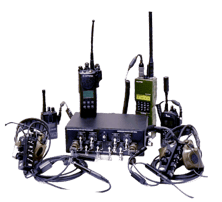
Radio interface cables provided with ICRI:
Motorola JEDI (XTS-3000), Motorola Spectra, Ericsson MRK, PRC-127,
SINCGARS, Motorola Astro Saber
__________________________
Charlottesville Fire Department, Virginia
“The ICRI provides the immediate ability to achieve radio interoperability between any wireless radio and/or wireless device. The unique feature of the ICRI is that not only can it meet the Rapidcom requirement of being deployed within one hour of an incident; it can literally be setup within 5 minutes.
Key to successful implementation, this device can be used to achieve interoperable communications with very little training and no technical assistance which is particularly important to adapting to new agencies or devices that need to connect. It is scalable and provides and may be used in an extended capacity through the use of a wire cable allowing interoperability to be used in buildings, basements, below grade/confined space and tunnel incidents.
The ICRI is portable and can be used practically anywhere (in any vehicle, in a facility, etc.).
From a cost perspective it is one of the most competitive devices for this functionality on the market and is generally 1/3 the price of similar market products.
It has been tested, accepted and is being deployed in military, public safety and emergency management settings around the world.”
Fire Chief Charles Werner
__________________________
Houston, Texas Police Department
“I currently serve as the Co-Chair of the Interoperability Committee along with Assistant Chief Smith of the Houston Fire Department. Last year I was requested…to research and evaluate different pieces of radio equipment that would allow the various Public Safety Agencies in the Houston / Harris County area to speak directly with each other by radio despite the incompatible radio networks.
What I found was the Incident Commander Radio Interface (ICRI) was the most suitable piece of equipment for rapidly deployable, day-to-day use. The City has since purchased 10 of these units and distributed them to the Police and Fire Departments.
Since taking delivery of these units I have had the opportunity to use them twice to coordinate large, muti-agency searches for armed suspects. In both instances the unit allowed Houston Police Officers to communicate directly by radio with the other agencies participating in the search alongside them…When searching a several acre area for multiple armed suspects the necessity for the patrol officers on the ground, the officers in the helicopter, and canine handlers to be able to speak directly to each other in real time is clear.”
Lieutenant S. F. Casko
__________________________
Greenville EMA, South Carolina
“We originally looked at the ACU-1000, and I worked with the two representatives sent here to plan it out its deployment in this jurisdiction. My recommendation was that the ACU-1000 was much too expensive and large for us to effectively use, and that it would not fully meet our interoperability needs. That's when I started looking for an alternative, and found the ICRI. Since then, we've found the ICRI to be a valuable resource, and we have done business exclusively with C-AT ever since.”
Robert Ward
__________________________
State of Georgia
Subj: RE: C-AT ICRI
Date: 02/09/2002 12:20:45 PM Eastern Standard Time
From: Chris.Bish@gbi.state.ga.us (Chris Bish)
To: Leymans@cs.com
CC: Russell.Andrews@gbi.state.ga.us (Russell Andrews)
In January of 2000, while preparing for the Super Bowl in Atlanta, Georgia,
all of the law enforcement agencies responsible for security held pre-event
planning sessions to address communications interoperability. The solution
was the temporary procurement of a rather expensive piece of equipment
($72,000.00) which enabled the direct connection between each agency
regardless of their frequency range nor type of equipment. Shortly
thereafter, in view of the need for such a piece of equipment for the GBI
which is a state-wide multi-faceted law enforcement agency, I submitted a
request to purchase this piece of equipment, however, due to the rather high
cost and annual fiscal constraints, the request was denied.
Consequently, we continue operating without direct connection to the myriad of agencies we
assist on a daily basis that are not in our frequency band. This past year
while attending the NATIA Conference in Memphis, TN, I examined the
Communications-Applied Technology ICRI device and subsequently field tested
it in our environment. I was extremely pleased with its portability,
durability, performance and especially its affordability. I have since
submitted a request to purchase the equipment for my unit (Special
Operations Unit) with a strong recommendation that additional units be
purchased for distribution to our offices throughout the State.....
CAB
__________________________
National Guard – Civil Support Team, WMD
24 May 2004
FYI, the past week I had exercises with Cambridge Fire, Boston Fire, USSS, and the USCG
Atlantic Strike Team.
System worked great.
SFC DAVID YOUNG
Communications Section Chief
1st Civil Support Team-WMD
Comm: 508-233-6488
Cell: 508-328-2218
__________________________
From: Haskell, William SBCCOM(N)
Sent: Wednesday, August 22, 2001 1:10 PM
To: Paul Maynard (E-mail)
Cc: Haskell, William SBCCOM(N)
Subject: Incident Commander Radio Interface (ICRI) – Inception/Uniqueness
Subject: Development of the Communications - Applied Technology's (C-AT) Incident
Commanders Radio Interface (ICRI)
The concept for the ICRI originated at a meeting I set up with Lt Richard Parker (Boston Fire
Department), Lt Eric Hahn (Boston Police Department & Harbor Master), LTC Jay Daly (then
Commander of the 1st CST) and Mr. Seth Leyman (Communications - Applied Technology) on
December 22nd, 1999.
The inability of emergency response agencies to communicate during a joint response was
discussed at length. One solution used by the Civilian Support Teams (CST) is to bring a large
number of hand held radios and distribute them to all the responding agencies (fire, hazmat,
emergency medical, police, public safety, state emergency management, city emergency
management, etc.). The CST may only be mobilized in relationship to a weapons of mass
destruction incident. Public safety agencies need to conduct joint operations for a wide variety of
other events and incidents such as natural disasters. Interagency communications is a serious
problem that did not have a practical and affordable solution.
As a result of this meeting, Mr. Seth Leyman provided an unsolicited proposal to develop a small,
portable device to address this intercommunications challenge. The proposed unit would be
configured to provide an audio matrix interface between land mobile radios and a landline/
cellular telephone. Radio ports could be provided in the design to permit additional radios to
join the incident command voice network. Each radio audio output port would use a voice
activation "radio key" and received priority circuitry developed by C-AT for Natick Soldier Center
under a previous program. The ICRI unit would be compatible with all commercial and military
radios including those operating in the clear or secure mode. Interconnect cables would be used
to interface with one of each agencies hand held mobile radios. Based on the unique
characteristics of the unit funding was provided to design and fabricate the first ICRI prototype.
The capabilities, combined with the low cost and ease of use of the ICRI make it a very unique
and cost effective product. The members of the DOD/DOJ InterAgency Subgroup for Inter-
Communications and Information Systems, to the best of their knowledge, have determined that
the ICRI is unique unit and are not aware of any similar commercially available products. The ICRI
would be of great benefit during joint response by public safety, federal and military
organizations. Please call me at DSN 256-4477 or comm: 508-233-4477 if I can be of further assistance.
V/R
Bill Haskell US Army SBCCOM National Protection Center Technical Program Development
Manager
|