Technology evolves faster than vehicle lifecycles.
Radios modernize. Waveforms shift. Missions expand.
ComForce is a modular in-vehicle communications control system
that integrates software-defined radios (SDR), LMR, MANET-capable radios,
and IP-capable tactical radios into structured, mission-ready crew communications.
Upgrade the radios.
Preserve the vehicle architecture.
Maintain clear crew communications under stress.
Built for Today’s Modern Battlespace
Today’s military and federal vehicles operate across:
• Mixed and transitioning radio fleets
• Software-defined radios and evolving waveforms
• Mesh-capable and IP-enabled radios
• Joint and coalition interoperability requirements
• Contested and degraded environments
• Rapid modernization cycles
ComForce maintains structured in-vehicle communications independent of external network availability or bandwidth.
Designed to support U.S. military, SOCOM, and coalition mission operations, ComForce enables mixed and evolving radio platforms to function within a controlled in-vehicle communications architecture.
Traditional intercom architectures were not designed for this reality.
ComForce was.

Vehicles remain in service for decades.
Radios evolve every few years.
ComForce is engineered as a stable in-vehicle control layer that integrates new radio technologies without forcing platform redesign.
When radios are upgraded, replaced, or reprogrammed:
ComForce integrates the radio.
The vehicle communications architecture remains intact.
This protects:
• Engineering investment
• Program timelines
• Fleet consistency
• Upgrade cycles across platforms
Modernization without disruption.
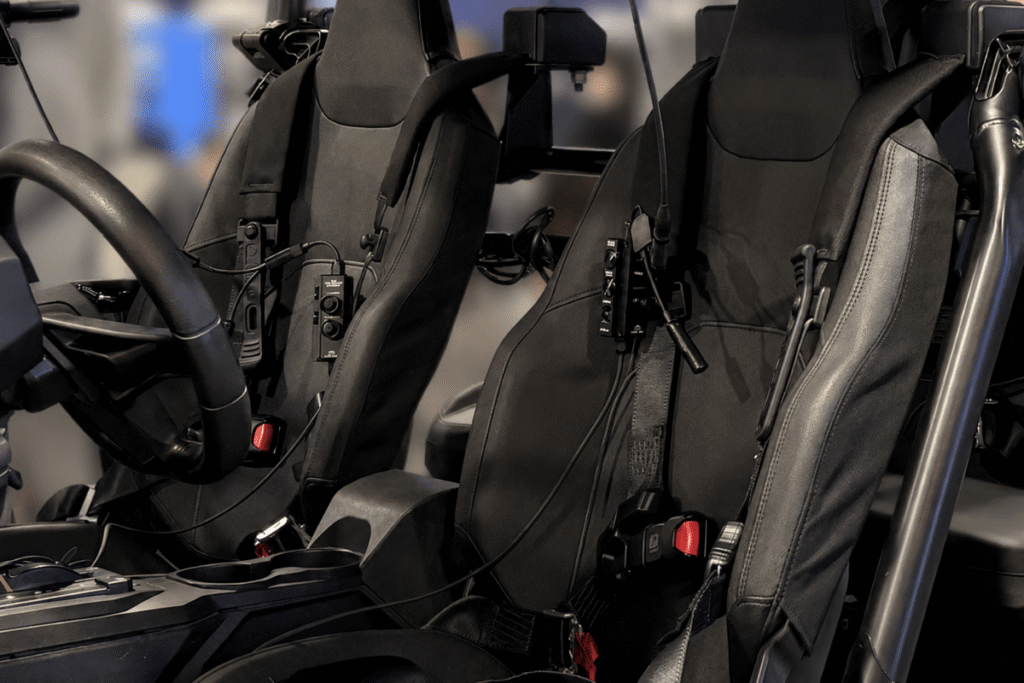
Clear communication between driver, commander, gunner, and crew positions inside high-noise armored platforms.
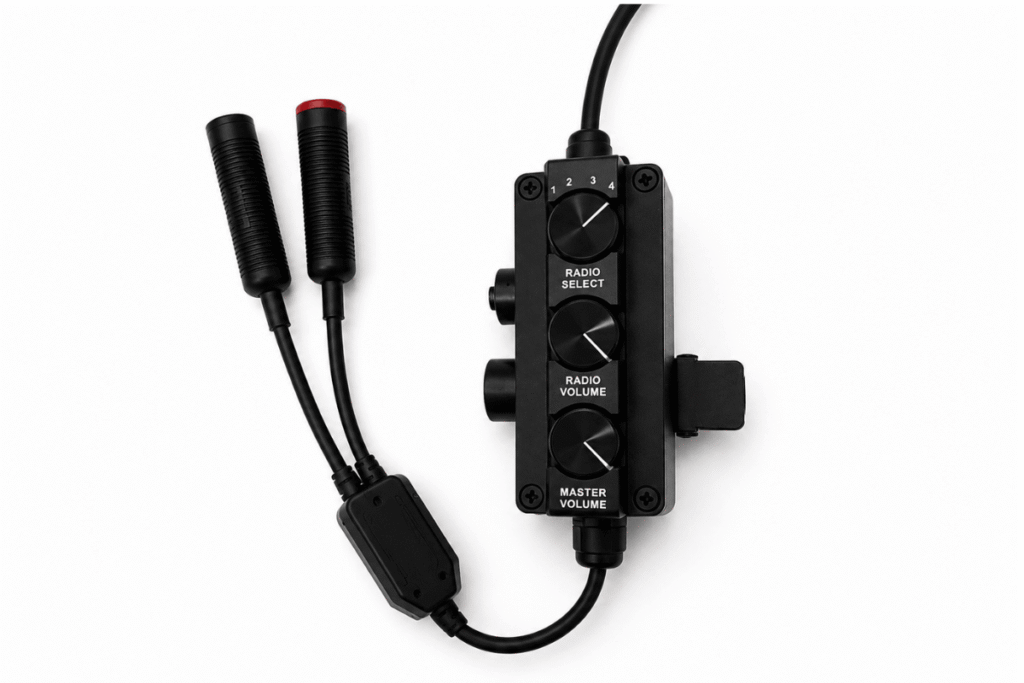
Each operator independently selects transmit radio and adjusts audio levels without impacting other crew members.
Large, tactile controls are engineered for use while wearing tactical gloves, enabling rapid adjustment in high-stress operational environments.
Compatible across military and commercial radio platforms, including SDR and IP-capable tactical radios.
Designed to support mixed and transitioning radio fleets while maintaining structured in-vehicle voice communications independent of external network availability.
ComForce manages voice routing and crew control.
Radio network and data operations remain native to the radio.
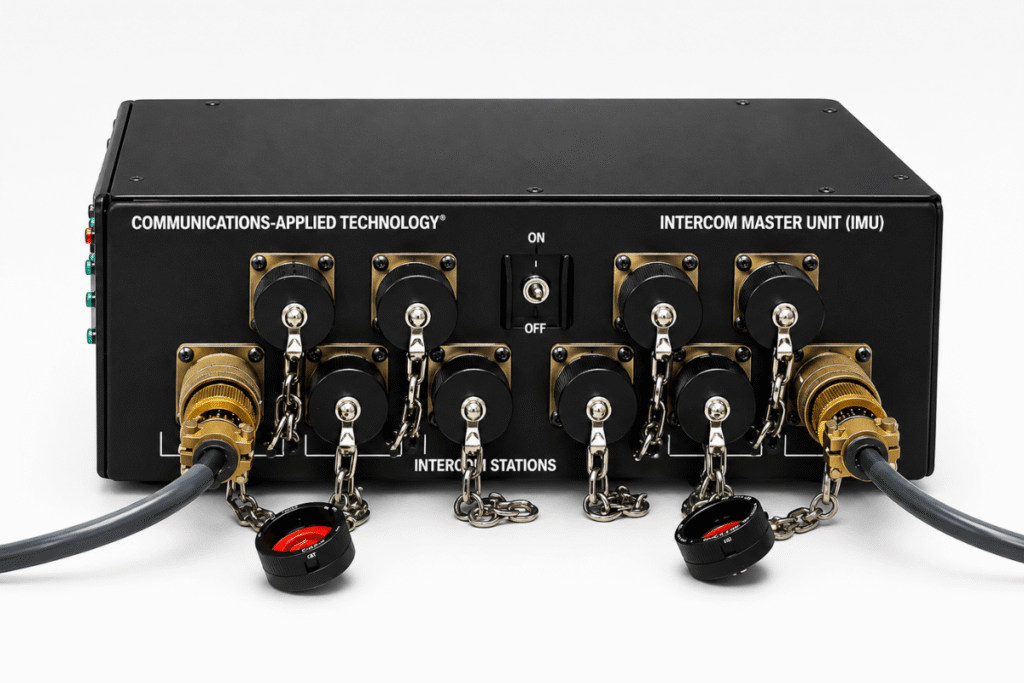
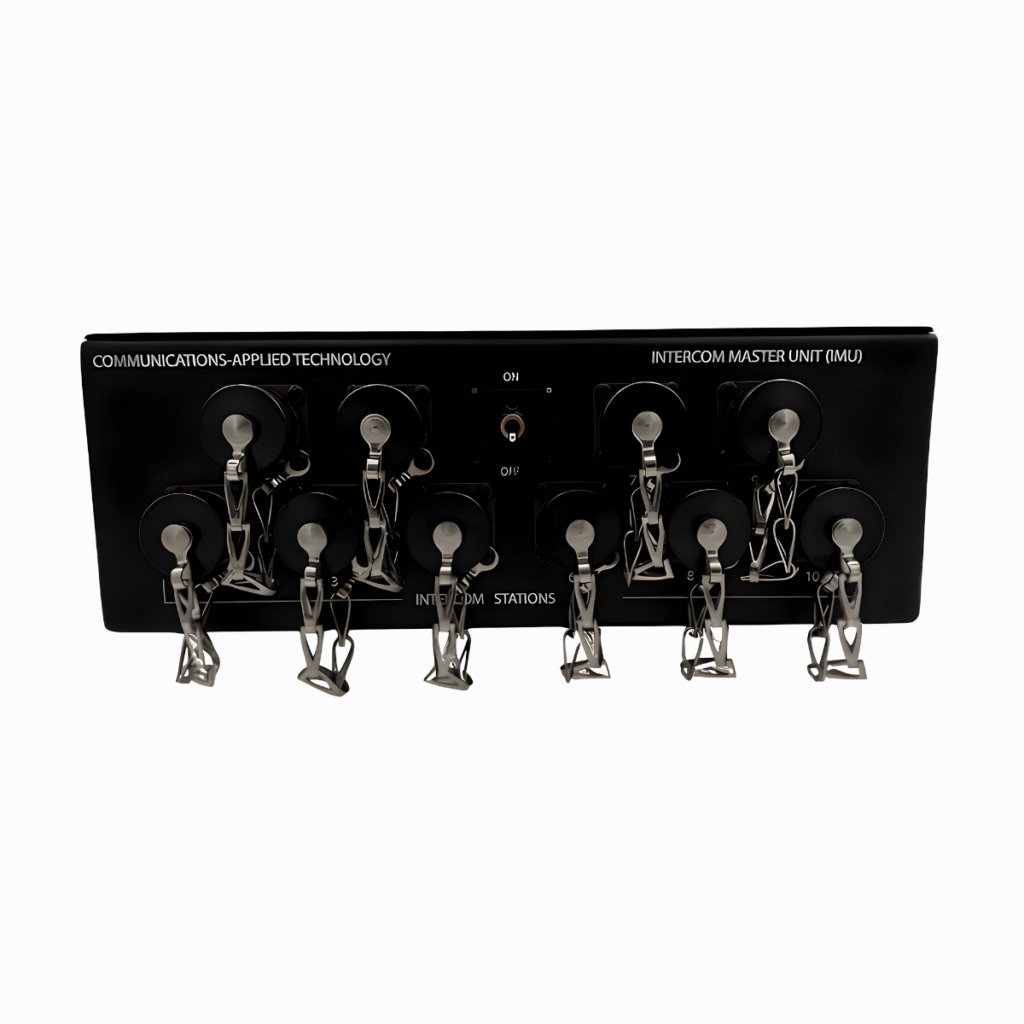
Supports up to four direct radio ports and up to ten intercom stations depending on configuration.
Integrates military LMR, software-defined radios (SDR), MANET-capable radios, partner nation radios, commercial mobile radios, and PTToc radios into a unified in-vehicle voice control architecture.
ComForce interfaces at the radio’s audio and control layer, enabling integration of evolving radio technologies without altering waveform, encryption, network, or data behavior.
Each directly connected radio maintains full transmit selection and routing control inside the vehicle.
ComForce integrates with existing military and commercial headsets using military-standard connectors.
Agencies retain current headset investments without vendor lock-in.
Military Tactical Operations
Armored Convoys
BearCat APC deployments
JLTV / MRAP / Command vehicles
Disaster Response & Mutual Aid
Infrastructure-Denied Operations
Multi-Agency Command & Control
Remote & Hard-to-Reach Environments
Optimized for light tactical vehicles supporting up to five crew positions and dual radio integration.
Supports expanded crew configurations with multichannel radio control.
Designed for larger armored vehicles, convoy command elements, and mobile commands with increased crew capacity and radio scalability.
ComForce integrates with radios operating across a wide range of military communicaton standards.
Sincgars
Single Channel Ground and Airborne radio system
muos
HF
P25 / DMR / TETRA
VHF/UHF
satcom / dama
MUOS, DAMA, L-Band Voice
LTE / 5G PTT
MANET / SDR
Mesh & Software-Defined Radios (MPU5, Silvus)
Comforce preserves full radio capability while enabling controlled access
Radios introduce expanded capability along with operational load.
ComForce structures multi-radio voice environments into controlled, mission-ready crew communications, reducing operator burden and preventing audio congestion under stress.
ComForce supports U.S. military tactical vehicles, federal agencies, and approved allied defense programs.
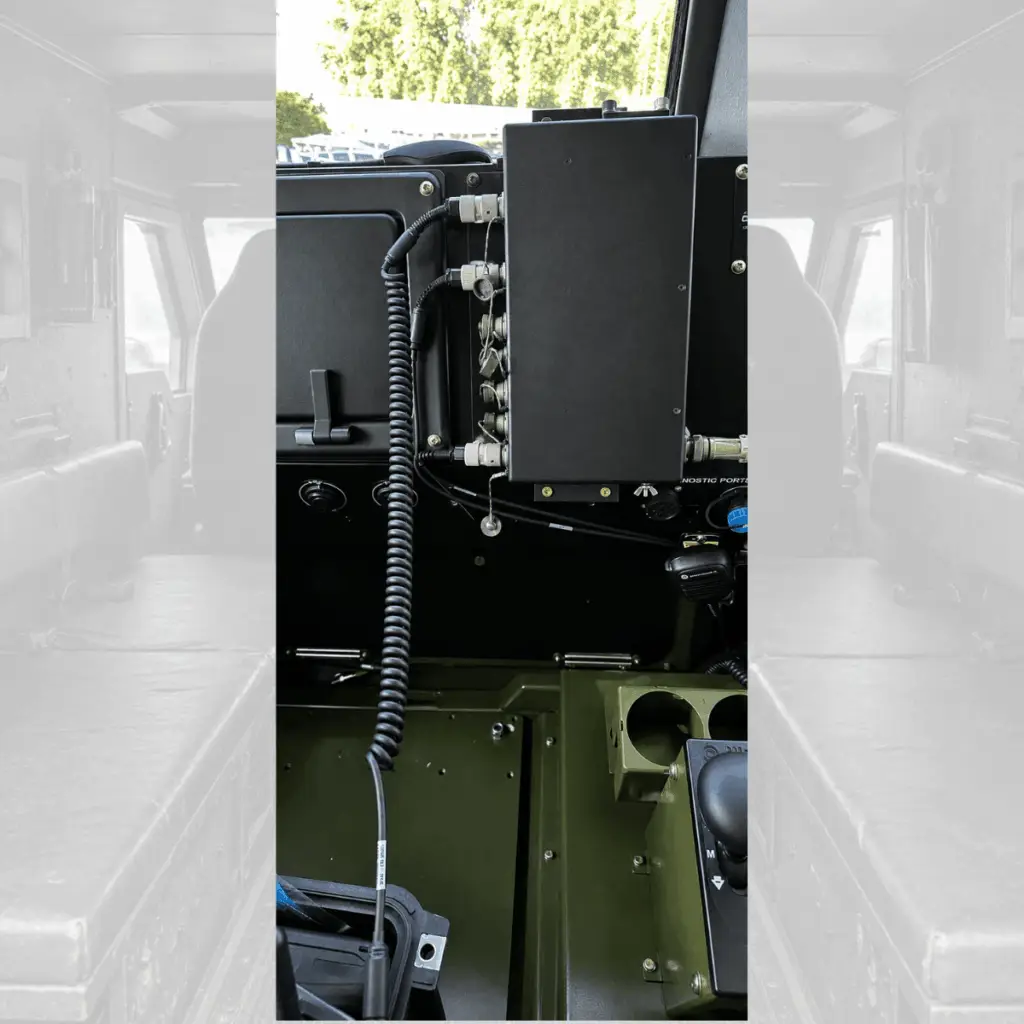
Engineered for integration into JLTV, MRAP, BearCat APC, convoy response vehicles, armored personnel carriers, and mobile command platforms operating in military tactical environments.
Supports ground vehicles, mobile command posts, maritime platforms, and expeditionary communication systems.
ComForce is specified and integrated by:
• Defense system integrators
• Vehicle OEMs and upfitters
• Prime contractors
• Government program offices
• International military modernization programs
• Tactical fleet program managers
Deployed across multiple U.S. and allied operational programs.
ComForce systems are available for U.S. Government programs.
and approved allied defense partners in accordance with applicable U.S. export regulations.
Radio-only communication inside armored and high-noise vehicles creates operational limitations.
Without a dedicated vehicle intercom system:
Engine, road, and environmental noise reduce intelligibility
Crew members compete for radio traffic
Audio cannot be independently routed
Command traffic interferes with internal coordination
Operator workload increases under stress
A vehicle intercom provides:
Noise-isolated crew-to-crew communication
Independent audio routing and transmit control
Clear separation between crew coordination and external radio traffic
Structured multi-radio management inside the vehicle
Clear internal communications are not optional in tactical or emergency response vehicles.
They are mission-critical.
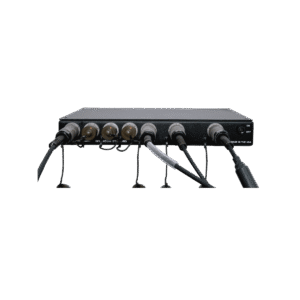
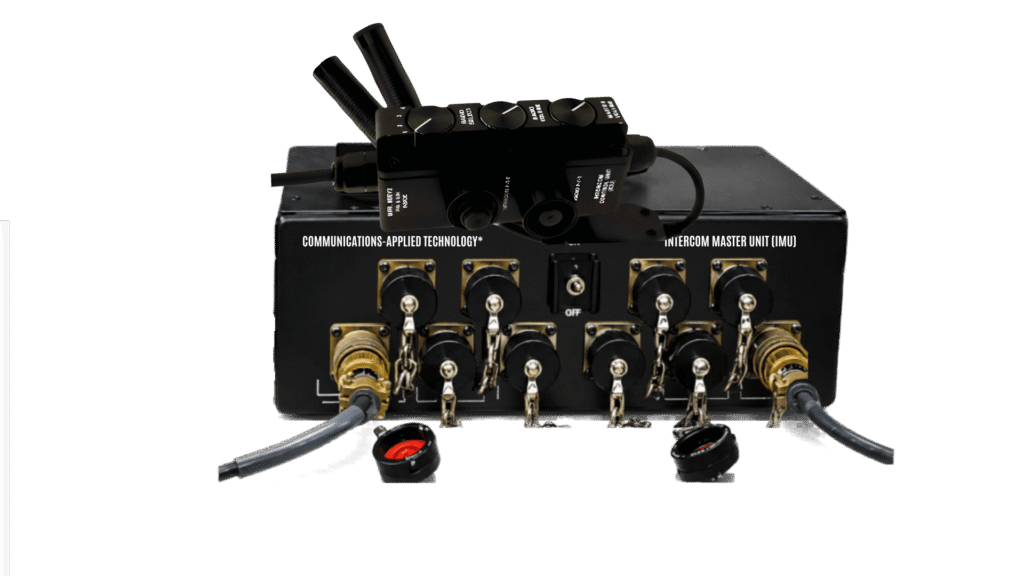
• IMU (Intercom Master Unit)
• ICU (Intercom Control Unit)
• Radio ports
• Headset integration
• Crew station scaling
JLTV and reconnaissance platforms.
Armored Personnel carriers and SWAT vehicles.
Command and Control vehicles.
Homeland Security and Mobile Command vehicles.
• Designed for vehicle OEM integration
• Supports modernization programs
• Supports mixed fleets
• Integrates into new builds and retrofit programs
Government agencies can procure C-AT systems through multiple streamlined purchasing paths:
• Cooperative contracts
• P-Card purchasing
• Government buying programs – GSA
• Funding and grant-supported procurement
• Compliance-ready acquisition options
C-AT supports rapid procurement for time-sensitive missions and emergency deployments.
Maintain structured crew communications in high-noise, high-stress, and degraded environments.