
ComForce 10.4 is a mission-critical vehicle communication system designed for command-level operations where multiple communication networks must be managed simultaneously.
Supporting up to 10 crew members and 4 radios, it enables structured coordination across command, tactical, and long-range communication channels.
ComForce 10.4 maintains control across these communication paths without adding system complexity.
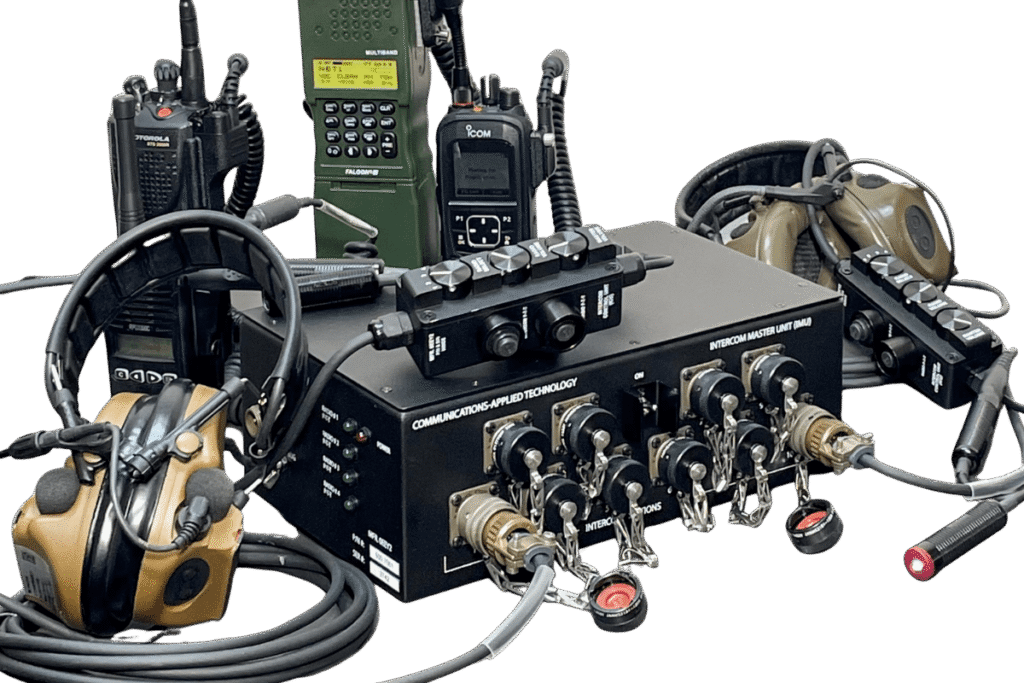
ComForce 10.4 is purpose-built for command and coordination vehicles.
ComForce 10.4 supports up to four radios within a single system, enabling access to multiple communication networks.
Clear separation between intercom and radio traffic
Focused communication maintains clarity in high-traffic environments
Radio and intercom audio paths are fully isolated
Radio transmissions are available to the crew without cross-interferene
No signal degradation introduced by the intercom system
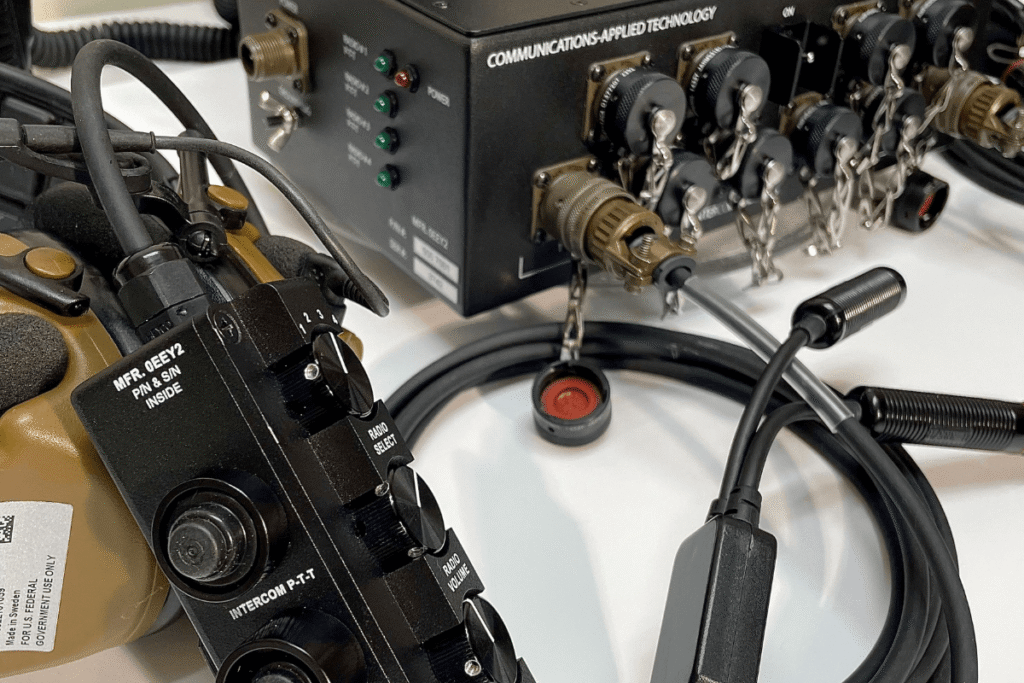
The ICU gives each crew member full authority over their communication environment without impacting the rest of the team.
Every operator maintains control without impacting the team.
Internal crew intercom remains active during radio transmission
Crew coordination is never interrupted by external communication
Full Situational Awareness
Operators maintain situational awareness at all times
Tactical control
The radios do the work.
ComForce ensures command can use them effectively.
Command vehicles have strict constraints on available space, weight capacity, and power draw.
ComForce is engineered to fit precisely within those limits.
Heavy-Gauge Aluminum Construction
Operates from -30°F to +140°F
Maintains performance in degraded and contested environments
comforce 10.4
ComForce 10.4 integrates seamlessly into existing vehicle systems while supporting future expansion.
ComForce 10.4 operates as a command-level communication system within the vehicle. When mission requirements expand, it integrates with the ICRI interoperability platform.
All extended capabilities are accessible through the same crew interface. Command maintains control without changing workflow.
Command-level communication without added complexity.
Engineered for high-stress environments
No changes to connected radio systems
Designed for vehicle power and space constraints
Built for degraded and contested environments
Expandable through ICRI for interoperability, VoIP, and SATCOM
Command-level capability without system management burden
Supports existing tactical radios and headset systems
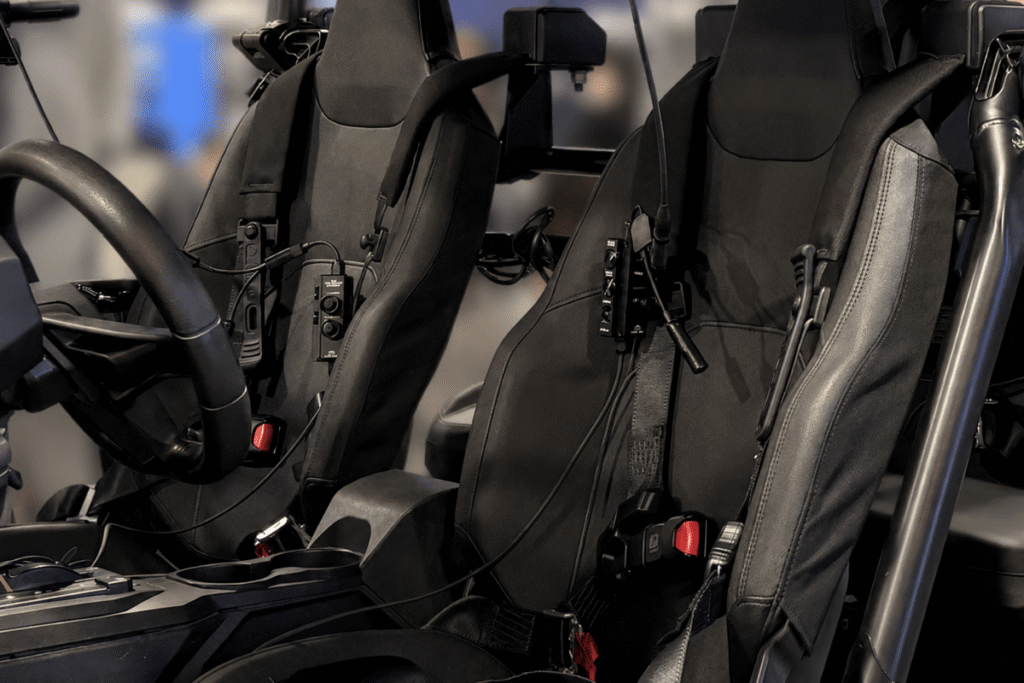
Vehicle-mounted controls accessible with tactical gear
Get Started
Configure ComForce 10.4 for your command vehicle and operational environment.
Our engineers work directly with program managers and integrators to configure ComForce 10.4 for your specific platform and mission requirements.
Share your vehicle platform and communication needs
Tailor ComForce 10.4 to your operational environment
Repeatable, program-level integration
Operator Pro can be deployed with agency-managed or C-AT-provided network equipment.
4
Radios
-30°–140°F
+11–31V
10
mission-critical
5-user / 2-radio
For smaller crew platforms with two communication networks
10-user / 4-radio
Full command configuration for complex multi-network operations
Radios introduce expanded capability along with operational load.
ComForce structures multi-radio voice environments into controlled, mission-ready crew communications, reducing operator burden and preventing audio congestion under stress.
ComForce 10.4 is used in environments requiring structured, multi-network communication control.
Platforms requiring interoperability across agencies and long-range communication
ComForce integrates with radios operating across a wide range of military communicaton standards.
Sincgars
Single Channel Ground and Airborne radio system
muos
Mobile User Objective System
HF
Long-Range Voice (ALE / Beyond Line-of-Sight)
P25 / DMR / TETRA
Public Safety & Digital LMR
VHF/UHF
Analog & Digital Tactical Communications
satcom / dama
MUOS, DAMA, L-Band Voice
LTE / 5G PTT
Mission-Critical Push-to-Talk (MCPTT / FirstNet)
MANET / SDR
Mesh & Software-Defined Radios (MPU5, Silvus)
Comforce preserves full radio capability while enabling controlled access
ComForce supports U.S. military tactical vehicles, federal agencies, and approved allied defense programs.
Engineered for integration into JLTV, MRAP, BearCat APC, convoy response vehicles, armored personnel carriers, and mobile command platforms operating in military tactical environments.
Supports ground vehicles, mobile command posts, maritime platforms, and expeditionary communication systems.
ComForce is specified and integrated by:
• Defense system integrators
• Vehicle OEMs and upfitters
• Prime contractors
• Government program offices
• International military modernization programs
• Tactical fleet program managers
Deployed across multiple U.S. and allied operational programs.
ComForce systems are available for U.S. Government programs
and approved allied defense partners in accordance with applicable U.S. export regulations.
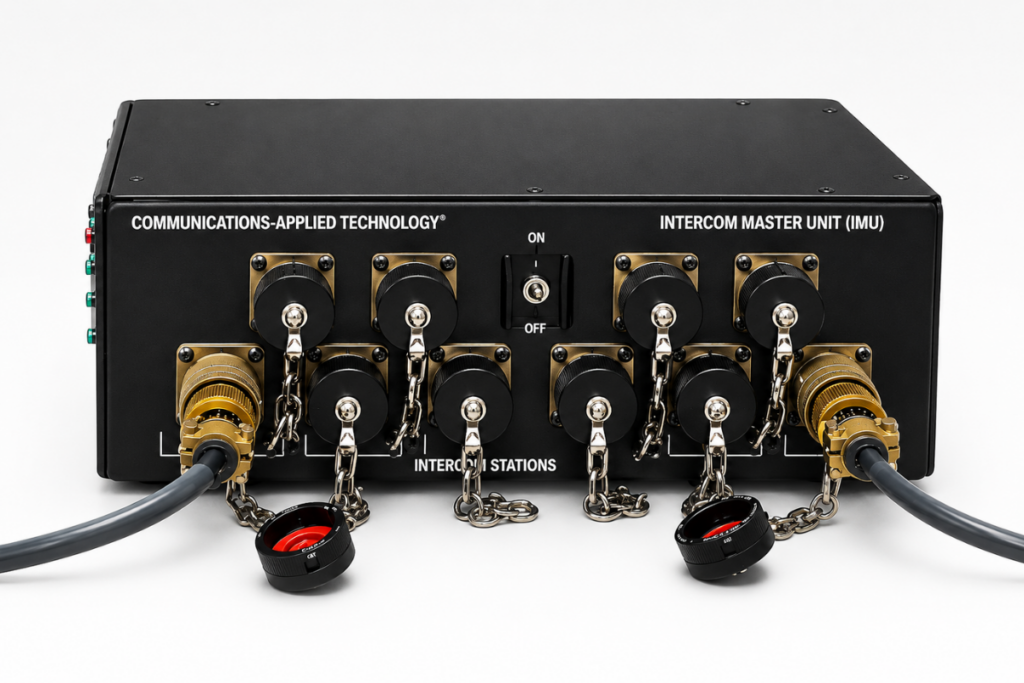
• IMU (Intercom Master Unit)
• ICU (Intercom Control Unit)
• Radio ports
• Headset integration
• Crew station scaling
Yes. All users can monitor connected radio channels while selecting one for transmission.
Yes. ComForce is designed for armored personnel carriers, tactical command vehicles, and mission-specific mobile platforms.
No. ComForce does not alter radio functionality, configuration, or encryption capability.
ComForce 10.4 supports up to ten crew positions with coordinated intercom and radio access control.
Yes. ComForce 10.4 integrates with existing tactical and mobile radio systems without requiring radio replacement or reconfiguration.
Yes. ComForce 10.4 supports both new vehicle integration and retrofit installation programs for existing tactical and command vehicle fleets.
Yes. ComForce is designed to support mixed and transitioning radio environments, including legacy, modernized, and software-defined radio platforms.
ComForce operates on +11 to +31 VDC with integrated spike protection and power conditioning.
ComForce supports tactical mobile and portable radios, mesh radios, SATCOM systems, and additional communication platforms as required by mission needs.
Yes. ComForce is engineered for armored and tactical vehicle environments where vibration, engine noise, and crew coordination are operational challenges.
Yes. ComForce 10.4 is commonly deployed in mobile command vehicles, armored platforms, convoy operations, and mission coordination environments.
Yes. ComForce integrates with the ICRI platform to support VoIP, SATCOM, and cross-agency interoperability.
Yes. ComForce provides structured communication control that reduces overlapping traffic and improves crew coordination during high-tempo operations.
Yes. C-AT supports multiple government procurement pathways including cooperative purchasing programs, GSA-aligned acquisition support, and agency purchasing programs.
ComForce is commonly integrated into armored personnel carriers, JLTVs, BearCat vehicles, command vehicles, tactical response platforms, and homeland security vehicles.
Yes. ComForce systems are designed and manufactured in the United States.
Expands to interoperable, VoIP, and SATCOM communications when required
ComForce systems are acquired and deployed as part of vehicle communication and integration programs.
Each system is configured based on vehicle platform, number and type of radios, crew size and configuration, and operational requirements.
Systems are delivered ready to integrate into the vehicle environment.
• Designed for vehicle OEM integration
• Supports modernization programs
• Supports mixed fleets
• Integrates into new builds and retrofit programs
Government agencies can procure C-AT systems through multiple streamlined purchasing paths:
• Cooperative contracts
• P-Card purchasing
• Government buying programs – GSA
• Funding and grant-supported procurement
• Compliance-ready acquisition options
C-AT supports rapid procurement for time-sensitive missions and emergency deployments.
Maintain structured crew communications in high-noise, high-stress, and degraded environments.